Overtraining: The Trap of “Always Wanting to Do More”




September 3, 2026 - By Nautilus Plus
 6 minutes
In just 30 seconds, AI can create a 12-week workout plan, a meal plan, and a sleep routine. It’s quick, free, and often seems reliable. More and more gym members are arriving with programs generated by chatbots. But can artificial intelligence truly help build an effective strength training program? The short answer: yes, it can be a valuable tool—provided you don’t let it take full control.
To be fair, it does have some real strengths. It’s available 24 hours a day, it doesn’t judge anyone, and it explains complex concepts in a remarkably accessible way. For a beginner who doesn’t know where to start, getting the basics down—such as frequency, the concept of sets and reps, and the importance of protein, sleep, and consistency—is better than going in circles between two machines.
And this motivational role is by no means trivial. A meta-analysis of 19 trials published in npj Digital Medicine showed that chatbots significantly increase physical activity and the number of daily steps[1]. A 2025 meta-analysis, combining 12 randomized trials and 2,446 participants, confirms a real, albeit modest, effect[2]. Sports science researchers say it themselves: AI is a good tool for drafting a “rough outline” of a program[3]. A rough outline. Not a program.
When ten certified trainers evaluated training plans generated by three different AI systems based on 27 quality criteria, the verdict was clear: “average” overall quality, with significant shortcomings in periodization and individualization[4]. Another study found that 90.7% of the exercise recommendations from a chatbot were accurate but incomplete on critical elements such as frequency and progression[5]. Worse still: plans generated for people living with type 2 diabetes presented serious safety issues whenever there were associated complications[6].
Do you see the problem? To identify the 10% of errors, you first need to know the correct answer. That is exactly the role of a healthcare professional.
This is the most underestimated point. A study published in *Science* analyzed 11 of the most widely used AI models: they agree with the user’s intentions 50% more often than a human would, even when the user is wrong[7]. When faced with a choice, they often opt for the wrong answer over the right one, simply to please you[8].
But we don’t really know ourselves very well. In a study of weightlifters, 56% underestimated the actual intensity of their workouts, regardless of their experience[9]. Another study showed that people underestimate by 2 to 3 repetitions what they’re actually capable of doing before muscle failure[10]. In other words: you provide the AI with a biased picture of yourself, and it returns a program that confirms that bias.
After all, they know training better than anyone. They surround themselves with coaches because a training plan must be based on rigorous testing and an external, qualified, and unbiased perspective—never on one’s own self-perception.
The data confirms this: given the same training program, a person under supervision makes more progress than someone left to their own devices. In a 12-week study, the group supervised by a coach increased their training loads more quickly and gained significantly more strength[11], and a meta-analysis of 12 trials reached the same conclusion[12]. It’s also worth noting that every body responds differently: even with the same program, gains in muscle mass vary from +3% to +14% from one person to another[13]. Therefore, two people following the same plan will not make the same progress in strength training.
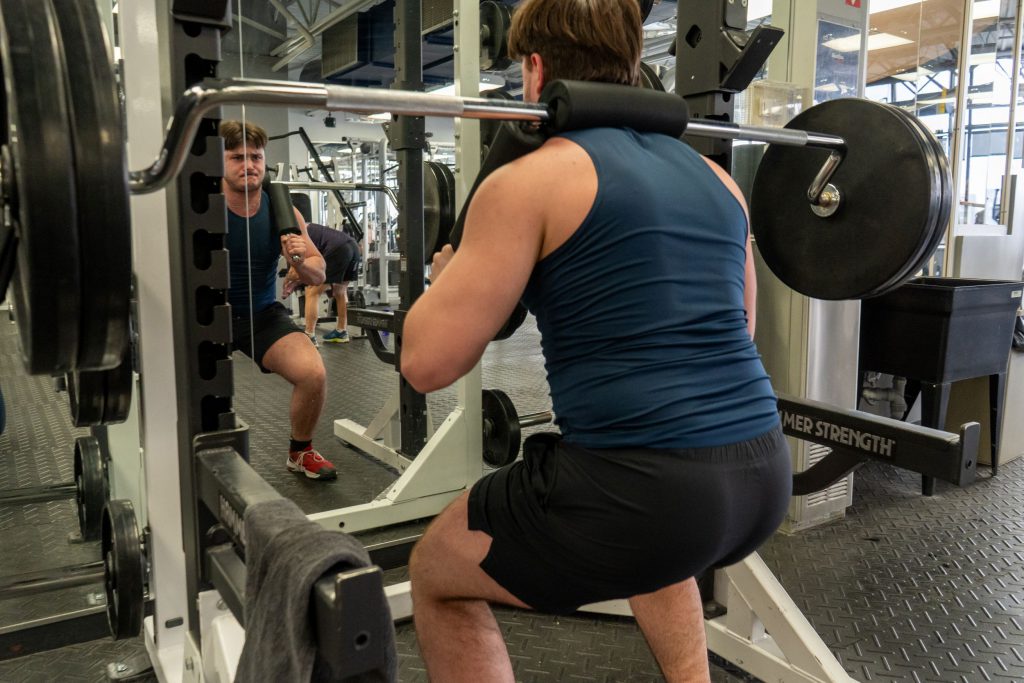
Your sleep over the past week. Your stress level. That old shoulder injury. Your squat form. Your motivation in February. The actual quality of your last three sets. A kinesiologist, on the other hand, tests, observes, adjusts, and reevaluates at every follow-up session. It’s precisely this cycle that builds sustainable progress in strength training.
So, friend or foe? A friend, like a co-pilot: to help you understand, ask questions, and stay motivated. An enemy the moment it takes the wheel. The best way to use it? Come in with your AI-generated questions… and validate them with your kinesiologist.
Article written by Victor Fabbri, kinesiologist
Artificial Intelligence: Friend or Foe of Your Workout? is a post from Nautilus Plus. The Nautilus Plus blog aims to help people in their journey to fitness through articles on training, nutrition, motivation, exercise and healthy recipes.
Copyright © Nautilus Plus 2026

Let's determine your fitness goals together and get some expert advice!
Make an appointment with a personal trainer